
Read time • 4 min
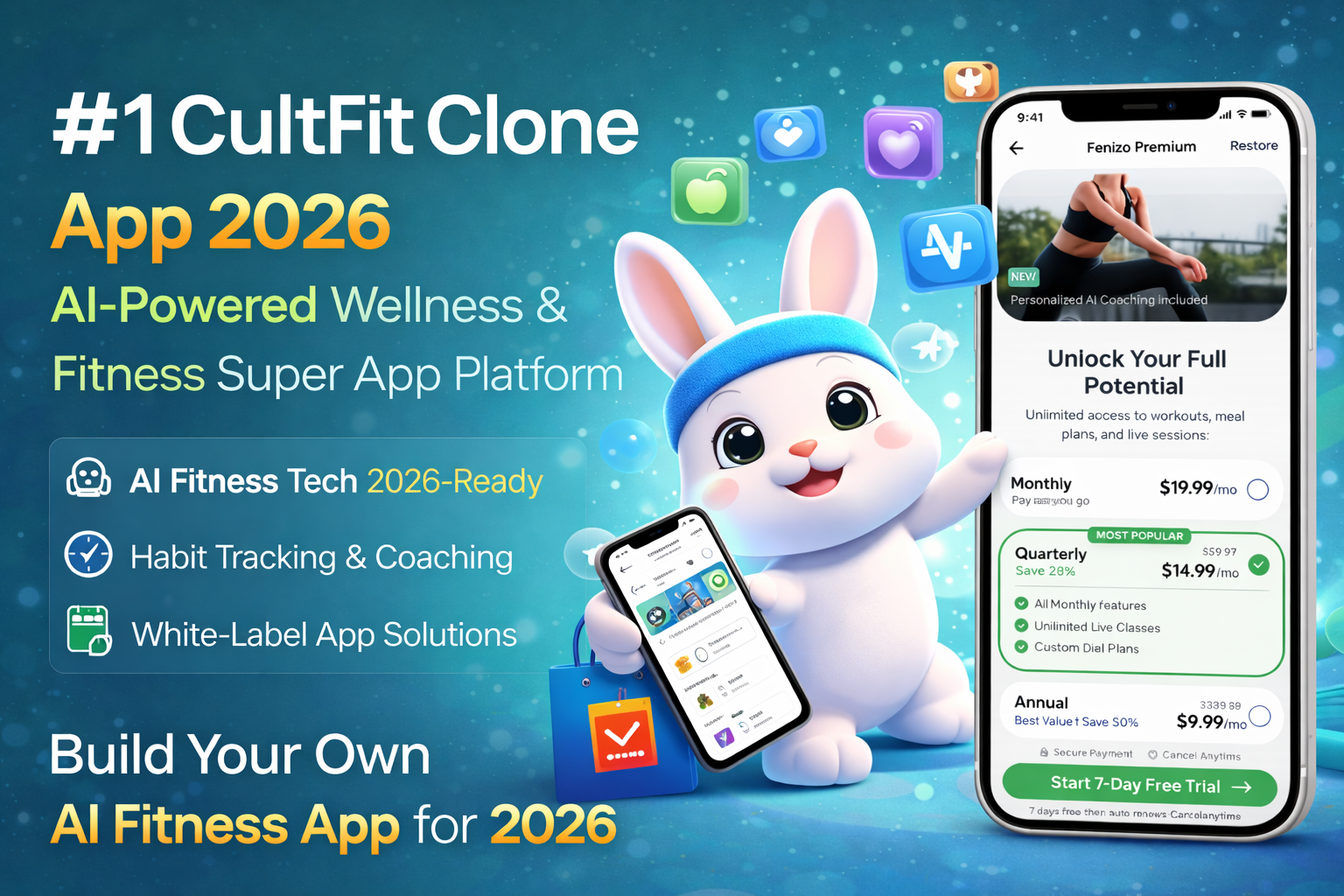
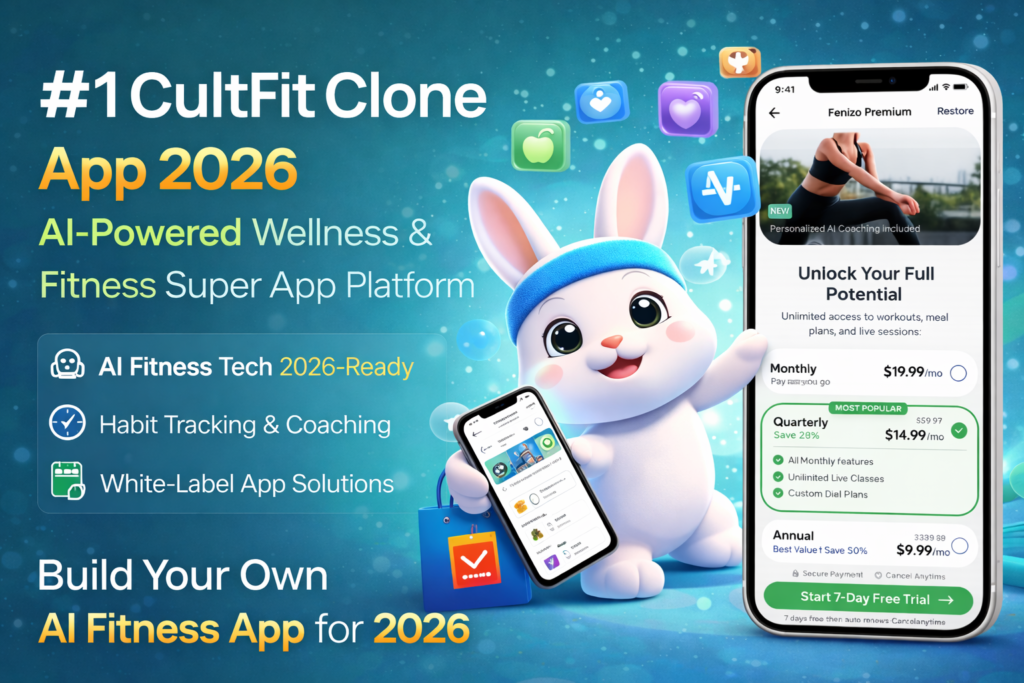
The global fitness & wellness industry has shifted rapidly toward digital platforms. Apps like CultFit, ClassPass, and Peloton have changed how users book workouts, access trainers, and subscribe to fitness programs.
These platforms prove one thing clearly: fitness subscription software and workout marketplaces are highly scalable. However, many gyms, trainers, and startups now want to build their own fitness platform instead of relying on third-party apps.
Fenizo helps businesses launch scalable health & wellness SaaS platforms using white-label fitness app solutions.
Platform Overview
CultFit
CultFit focuses on gym classes, fitness programs, and wellness services under a subscription model.
Key Strengths:
- Group workout bookings
- Fitness memberships
- Trainer-led programs
- Integrated wellness services
Limitations:
- Limited customization for partners
- Platform-controlled pricing
- No brand ownership
This model inspires many startups to build a CultFit clone software with more flexibility.
ClassPass
ClassPass is a gym booking platform that allows users to access multiple gyms and studios through one subscription.
Key Strengths:
- Multi-gym access
- Credit-based booking system
- Flexible class discovery
Limitations:
- Revenue dependency on platform
- Limited control for gyms
- Fixed monetization structure
Peloton
Peloton is a hardware + content-driven fitness platform, focused on premium digital workouts.
Key Strengths:
- Live & on-demand classes
- Trainer-centric content
- Subscription-based revenue
Limitations:
- High entry cost
- Hardware dependency
- Not suitable for local gyms
CultFit vs ClassPass vs Peloton – Comparison
| Feature | CultFit | ClassPass | Peloton |
|---|---|---|---|
| Platform Type | Fitness marketplace | Gym booking platform | Content-led fitness |
| Monetization | Subscription | Credit-based | Subscription |
| Trainer Marketplace | Limited | ❌ No | ❌ No |
| Gym Control | Limited | Limited | ❌ No |
| Branding Ownership | ❌ No | ❌ No | ❌ No |
➡️ These limitations push gyms and startups to invest in custom fitness & wellness app development.
Why Build Your Own Fitness Platform?
Creating your own platform gives you full business control, unlike CultFit, ClassPass, or Peloton.
Key Benefits:
- 100% brand ownership
- Custom subscription & pricing models
- Direct customer & trainer data
- Flexible content & workout formats
- Scalable health & wellness SaaS architecture
Fenizo builds marketplace platforms similar to Home Services Aggregator Software and service-based ecosystems.
Core Features of a Fitness Platform
1️⃣ User / Member App
- Fitness class discovery
- Gym & trainer booking
- Subscription management
- Workout history & progress tracking
- Secure online payments
This experience is essential for any fitness subscription software.
2️⃣ Trainer & Coach Marketplace
- Trainer onboarding & profiles
- Workout & program creation
- Live & recorded session management
- Earnings & payout dashboard
This transforms the platform into a workout & trainer marketplace.
3️⃣ Gym / Studio Panel
- Class scheduling
- Capacity management
- Membership & booking control
- Revenue analytics
This acts as a complete gym booking platform.
4️⃣ Admin Panel
- User, trainer & gym management
- Subscription & pricing rules
- Payment & settlement tracking
- Reports & analytics
- Content moderation
Admin systems follow scalable logic used in Fenizo’s Crowdfunding Portal Software and enterprise SaaS platforms.
Advanced Features for Fitness & Wellness Apps
- Live video workouts
- On-demand class library
- Nutrition & wellness programs
- AI-based workout recommendations
- Referral & loyalty programs
- API & Third-Party Integrations
Technology Stack for Fitness Platform Development
Frontend
- Mobile Apps: Flutter / React Native
- Web App: React.js / Next.js
Backend
- Node.js (NestJS / Express)
Database
- MySQL / PostgreSQL
- MongoDB
Video & Real-Time
- WebRTC
- Streaming SDKs
Payments
- Stripe / Razorpay / PayPal
- Wallet & subscription billing
Cloud
- AWS / Google Cloud
Cost to Build a Fitness Platform
Cost depends on features, video usage, and scalability.
Estimated Cost:
- Basic MVP: $4,000 – $7,000
- Mid-Level Platform: $7,000 – $15,000
- Enterprise Fitness SaaS: $15,000 – $30,000+
You can review scalable pricing via Fenizo’s MLM Software Pricing models.
Who Should Use White-Label Fitness App Software?
- Gyms & fitness studios
- Personal trainers & coaches
- Wellness startups
- Corporate fitness programs
- Digital health entrepreneurs
Conclusion
CultFit, ClassPass, and Peloton have proven the demand for digital fitness platforms—but they come with platform dependency and limited control. Building your own fitness platform gives you complete ownership, flexible monetization, and long-term scalability.
If you’re planning fitness & wellness app development, Fenizo provides white-label fitness app solutions built for growth, performance, and brand control.
👉 Explore Fenizo’s Custom App Development Services or Marketplace Platforms to get started.